


Launching products today is easier than ever. Managing their content isn't.
An ecommerce brand that is building momentum may sell on its own website, Amazon, Flipkart, Walmart, Instagram Shops, and countless other marketplaces.
Each channel requires optimized titles, descriptions, specifications, images, videos, and attributes. Multiply that by hundreds or even thousands of SKUs, and all of a sudden content has become one of the largest operational bottlenecks.
The numbers tell the story:
Nonetheless, spreadsheets, scattered folders, and manual updates remain utilized by many businesses to manage their catalog. It is at this point that content management in ecommerce turns into a growth strategy, rather than an administrative undertaking.
Ecommerce content management involves creating, organizing, updating, storing, and publishing all customer-facing content on all the digital sales channels. It goes well beyond writing product descriptions.
A well-managed ecommerce catalog includes:
The goal is straightforward: make sure that all customers can see the correct, interesting, and consistent information in all shopping areas. In the absence of organized content management for ecommerce, product information rapidly becomes obsolete, inconsistent, and ineffective to scale.
Most ecommerce businesses don't notice content issues until growth starts slowing down. When product information is managed manually, problems begin to compound.
Launching hundreds of products often requires multiple approvals, spreadsheet updates, image edits, and platform-specific formatting. Instead of focusing on marketing or sales, teams spend valuable time fixing content.
Imagine a customer seeing one product specification on your website and another on Amazon. Even small inconsistencies reduce trust—and trust directly impacts conversions.
Search engines reward unique, informative content. Duplicate manufacturer descriptions, missing metadata, and thin product pages limit visibility and reduce organic traffic.
According to Salsify's Consumer Research, inaccurate or incomplete product information is one of the leading causes of online product returns. Every avoidable return increases operational costs and lowers customer satisfaction.
The best ecommerce brands don't treat content as an afterthought. They see it as a revenue-generating asset. A structured content management ecommerce strategy helps businesses:
Well-managed content doesn't simply improve operations; it improves customer confidence. And confident customers buy faster.
Strong ecommerce content management combines people, processes, and technology.
When product information lives across spreadsheets, shared drives, and email threads, mistakes become inevitable. A centralized repository ensures everyone works from a single source of truth. This improves collaboration while reducing duplicate work.
Every product page should answer customer questions while targeting search intent. This means:
The challenge is maintaining these standards across hundreds or thousands of product pages. A defined approach to ecommerce content creation gives teams a repeatable framework for producing consistent, search-friendly product content at scale.
Templates ensure consistency regardless of who creates the content. Whether you're publishing 50 products or 50,000, customers receive the same level of quality.
Manual publishing slows everything down. Automation allows brands to review, approve, and publish content simultaneously across websites and marketplaces, reducing both errors and turnaround time.
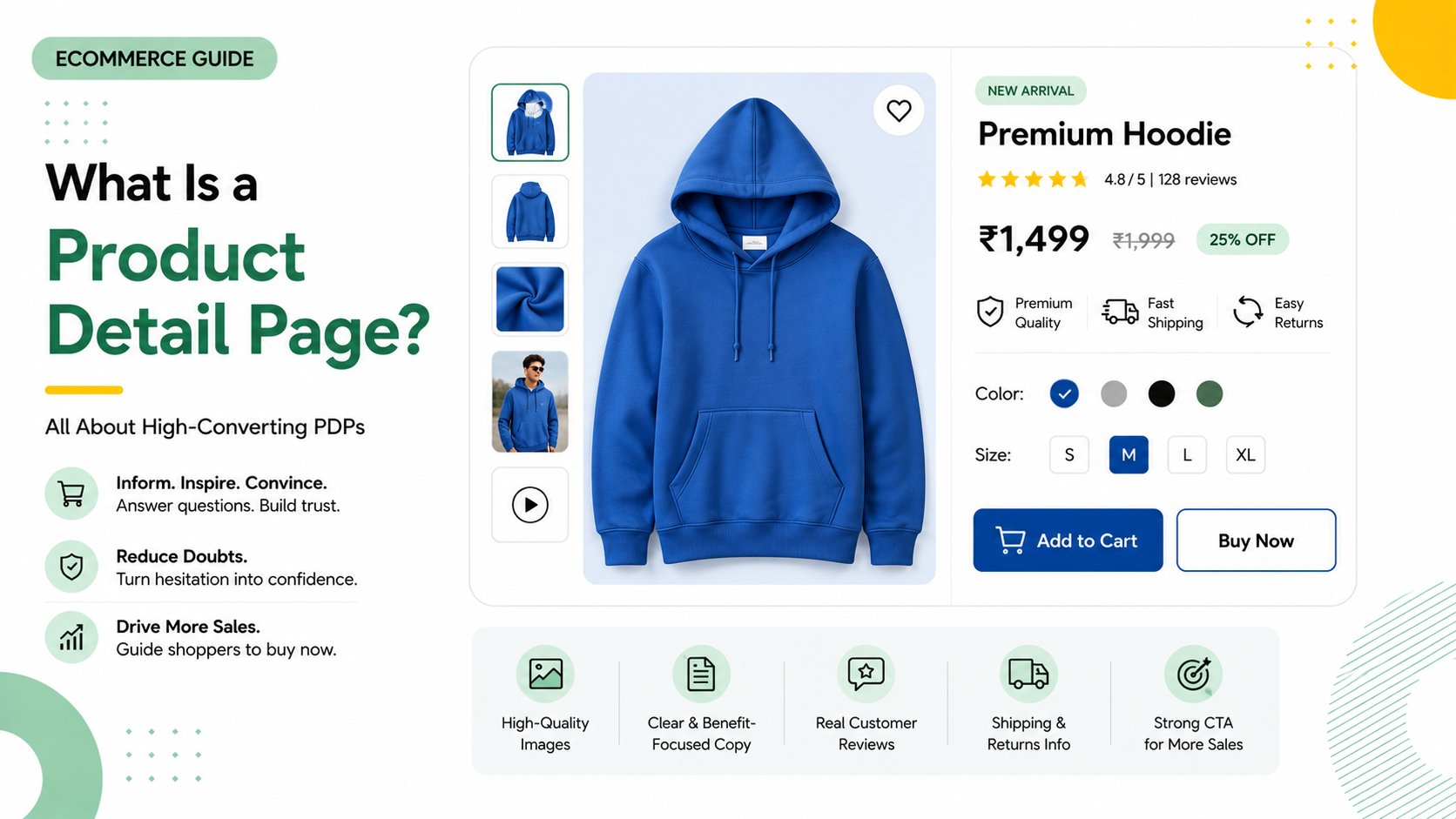
Today's shoppers expect more than static product images. Winning PDPs include:
Research from Shopify shows that products featuring video can significantly improve purchase confidence compared to text-only listings.
If several of these sound familiar, your content workflow may be limiting growth.
As your catalog grows, these small inefficiencies quickly become major operational challenges.
Leading ecommerce businesses no longer manage content channel by channel. Instead, they create once and publish everywhere. Modern content management for ecommerce platforms helps brands:
Solutions like ODN's Ecommerce Content Production go a step further by combining AI-assisted content creation, marketplace optimization, catalog enrichment, and multi-channel publishing, allowing brands to scale without sacrificing quality.
All ecommerce brands spend money on advertisements to attract shoppers. However, once customers arrive at a product page, content is what makes the difference between purchasing a product and leaving the page.
With the growth of catalogs and the development of omnichannel commerce as a new standard, manual workflows simply can't keep pace. Investing in ecommerce content management will result in quicker launches, higher search engine optimization, enhanced customer experience, and long-term growth.
The question isn't whether your business needs better content management. It's whether your competitors will implement it before you do.
Tell us what you're working on and we'll get back to you with ideas and next steps.


Content management in ecommerce deals with organizing, updating, and publishing product-related information such as product descriptions, images, videos, specifications, and product metadata on ecommerce websites and marketplaces.
It enhances search engine optimization, customer confidence, accelerates product release, minimizes returns, and provides uniformity of information across all channels of sale
Proper descriptions, detailed images, full specifications, and uniform messages assist customers in making a sound purchasing decision, resulting in an increase in conversion rates.
Centralizing and automating content operations by businesses is often facilitated using CMS, PIM (Product Information Management), DAM (Digital Asset Management), and ecommerce content production platforms
Begin with centralizing product information, developing standardized templates, streamlining content for SEO, automating workflows, and continually auditing product pages to ensure accuracy and consistency.

.png)


