

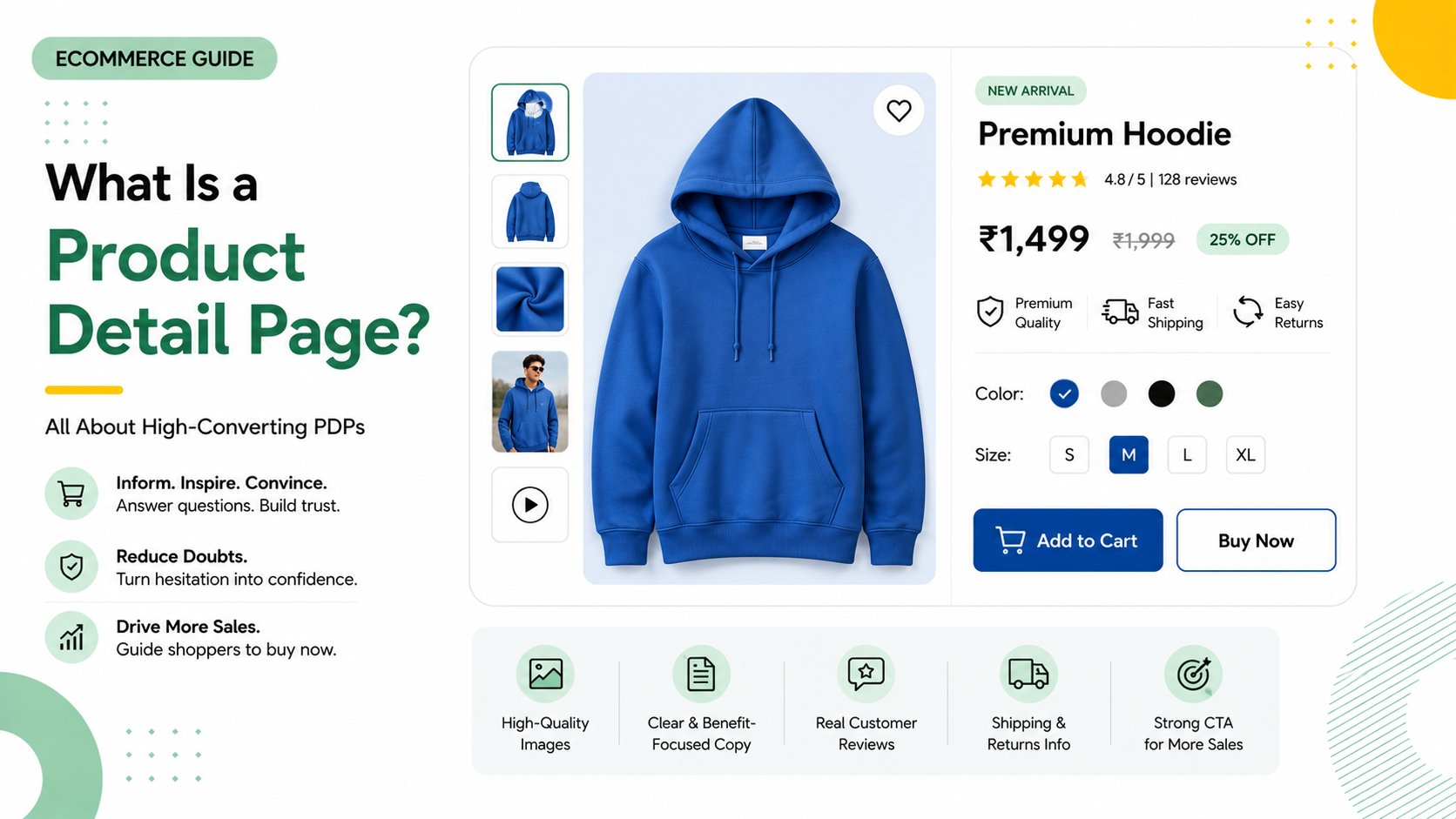
Imagine this- almost 70% of online shopping carts have been abandoned, and one of the largest causes is that shoppers lacked sufficient information or assurance to make a buy.
When they are offered a product, they press a button and skim the product and pages for details; they compare the prices and reviews, and decide whether or not they will put their trust in the brand within a second.
That decision happens on the product detail page (PDP).
Think of your product details page as your best salesperson. It answers questions, showcases benefits, removes doubts, and convinces shoppers to click "Buy Now" without speaking a single word.
If you're wondering what is a product detail page, why it matters, and how to create one that converts visitors into customers, this guide covers everything you need to know.
A Product Detail Page (PDP) is a webpage that customers use to learn about a particular product and then make a purchase. It contains a product description, pricing, specifications of the product, product image, reviews, and shipping information of the product, as well as the purchase options.
The product detail page PDP is also dissimilar to category pages, as it can assist the customer in making a purchase decision, unlike the category page that assists customers in seeing the products.
An effective PDP should answer questions like:
When these questions are answered clearly, conversions naturally improve.
Modern shoppers rarely buy after viewing just one page. They compare products, read reviews, zoom into images, and even search Google for additional information before purchasing.
A high-converting product details page helps by:
According to Baymard Institute research, unclear product information is among the leading reasons shoppers abandon purchases.
Not every PDP performs equally. The best-performing pages combine persuasive content with an intuitive shopping experience.
The goal is to reduce friction throughout the buying journey.
Excellent product detail page design is about much more than appearance. It should guide users naturally from discovery to purchase.
Here are some proven design practices:
Avoid clutter. Important information like pricing, CTA buttons, product images, and reviews should be visible without overwhelming users.
More than half of ecommerce purchases now happen on smartphones. Your PDP should load quickly and remain easy to navigate on every screen size.
Help users scan information by organizing the following sections clearly:
Include:
Visual content reduces buying uncertainty significantly.
As product catalogs grow, maintaining consistent, optimized PDPs across hundreds of SKUs becomes increasingly difficult. Investing in product content optimization helps brands keep product information accurate, search-friendly, and conversion-focused at scale.
Instead of simply listing features, explain benefits. High-performing PDPs rely on product descriptions that balance search visibility with persuasive copy.
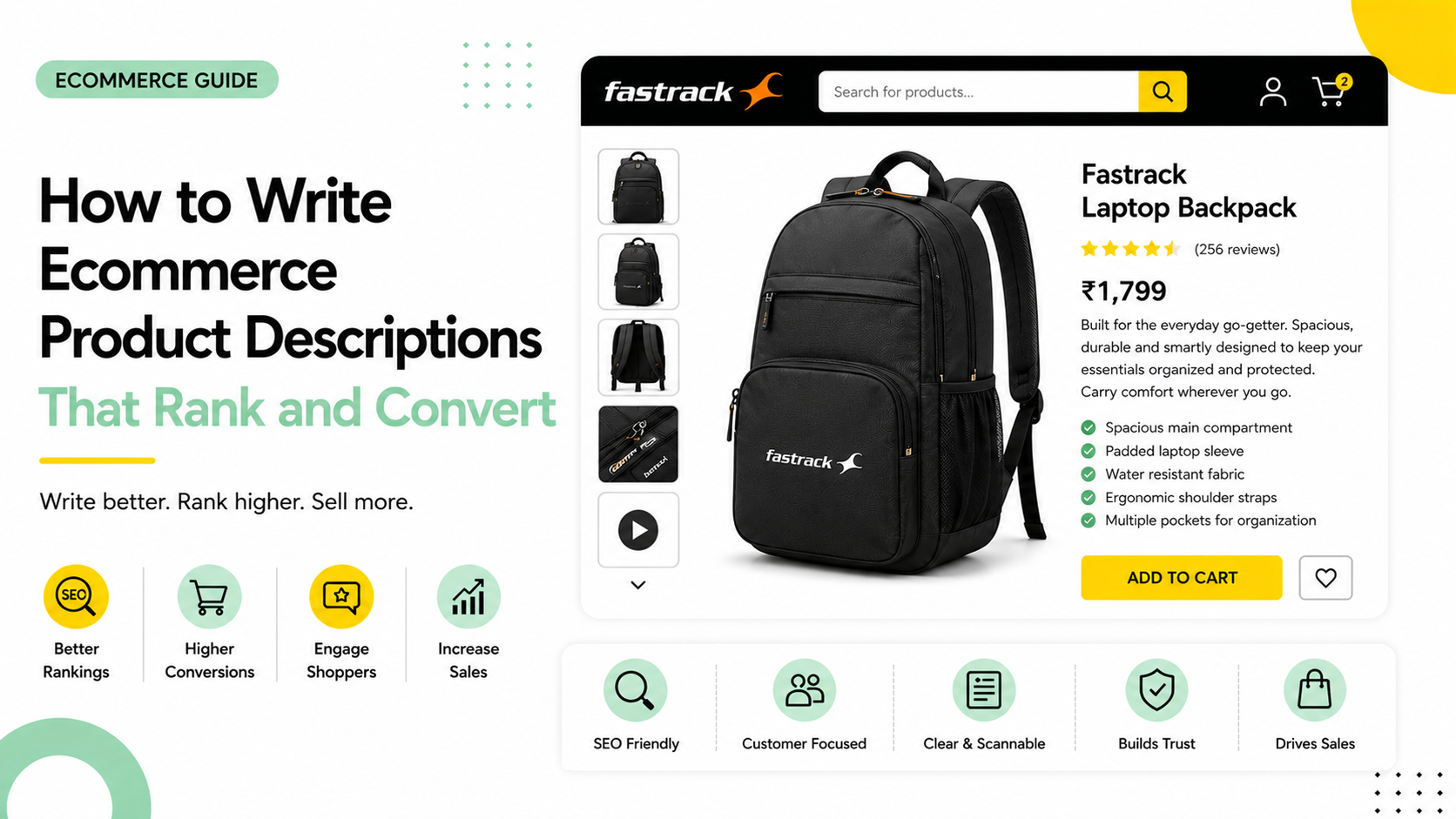
If you're looking to improve both visibility and sales, understanding how to write ecommerce product descriptions that rank and convert is an important part of building high-performing product pages.
Instead of:
"Made from stainless steel."
Write:
"Premium stainless steel construction resists corrosion while ensuring years of reliable use."
Naturally include keywords like:
without keyword stuffing.
Use:
Optimized images improve both accessibility and page speed.
User-generated content builds trust while also adding fresh keyword-rich content to the page.
Answer common questions before customers contact support.
Examples:
FAQs improve user experience and support Google's AI-powered search results.
The best product detail page design balances information with simplicity. While every industry differs, successful brands typically include the following:
Apple
Apple keeps its PDP clean with stunning visuals, concise copy, and clear product benefits.
Nike
Nike combines multiple product images, sizing information, customer reviews, and lifestyle photography that helps buyers visualize ownership.
IKEA
IKEA provides dimensions, assembly instructions, product materials, room inspiration, and availability, all in one easy-to-navigate page.
These product detail page examples demonstrate that successful PDPs focus on answering customer questions rather than simply listing specifications.
A well-optimized PDP doesn't just convert visitors; it also attracts them. Follow these SEO best practices:
These improvements help search engines better understand your products while improving visibility in organic search.
A product detail page is not just another webpage, but the place where buying decisions are made. All headlines, pictures, reviews, specifications, and call-to-action elements will build trust or cause reservations.
Brands with functional product detail pages and user-friendly functionality in product detail pages and content, as well as responsive product detail page design, are always converted better, ranked higher in search engine rankings, and command more customer loyalty.
Rather than considering your PDP as a digital catalogue, consider it as your most valuable salesperson who will answer questions and close sales 24/7 on all levels of the customer journey.
Tell us what you're working on and we'll get back to you with ideas and next steps.


A product detail page is an ecommerce web page that contains all information about a particular product, such as images, descriptions, prices, specifications, product reviews, and buying opportunities.
A good PDP must have good images, strong product descriptions, prices, technical specifications, user reviews, shipping, frequently asked questions, and a call-to-action.
Product detail page optimization enhances search engine visibility, user experience, and bounce rate, and optimizes conversion rate by facilitating the easy making of confident shopping decisions by the shoppers.
The best product detail page design is one that is loaded quickly, mobile-friendly, easy to navigate, has (convincing) content, trust indicators, and high-quality graphics that tend to lead the customer to make a purchase.
Yes. Organic ranking and qualified traffic are positively attained through well-optimized product pages that contain unique content, structured data, optimized images, internal links, as well as relevant keywords.
Popular product detail page examples include ecommerce pages of Apple, Nike, IKEA, Amazon, and Sephora. A combination of educational materials, sleek design, user reviews, and attractive images creates a harmonious shopping experience in these brands.

.png)


