


Can AI really help ecommerce brands scale product catalogs without sacrificing content quality? The answer is increasingly yes. NVIDIA’s 2025 retail survey found that 89% of retailers are already using or assessing AI, while 94% say it has helped reduce annual operational costs.
For ecommerce brands managing thousands of SKUs across websites, Amazon, Flipkart, Walmart, and other marketplaces, AI can turn hours of repetitive catalog work into streamlined workflows. From generating product content and enriching attributes to identifying missing information and maintaining consistency, AI is changing how businesses manage product catalogs at scale.
Modern AI catalog management isn't simply about automating repetitive tasks. As ecommerce catalogs continue to grow, AI is becoming less of a competitive advantage and more of a necessity.
Ecommerce catalog management is the process of organizing, enriching, updating, and distributing product information across every sales channel. A complete ecommerce product catalog typically includes:
The objective is simple: ensure customers receive accurate, engaging, and consistent information wherever they shop.
Without effective catalog management in ecommerce, product data quickly becomes outdated, inconsistent, and difficult to scale.
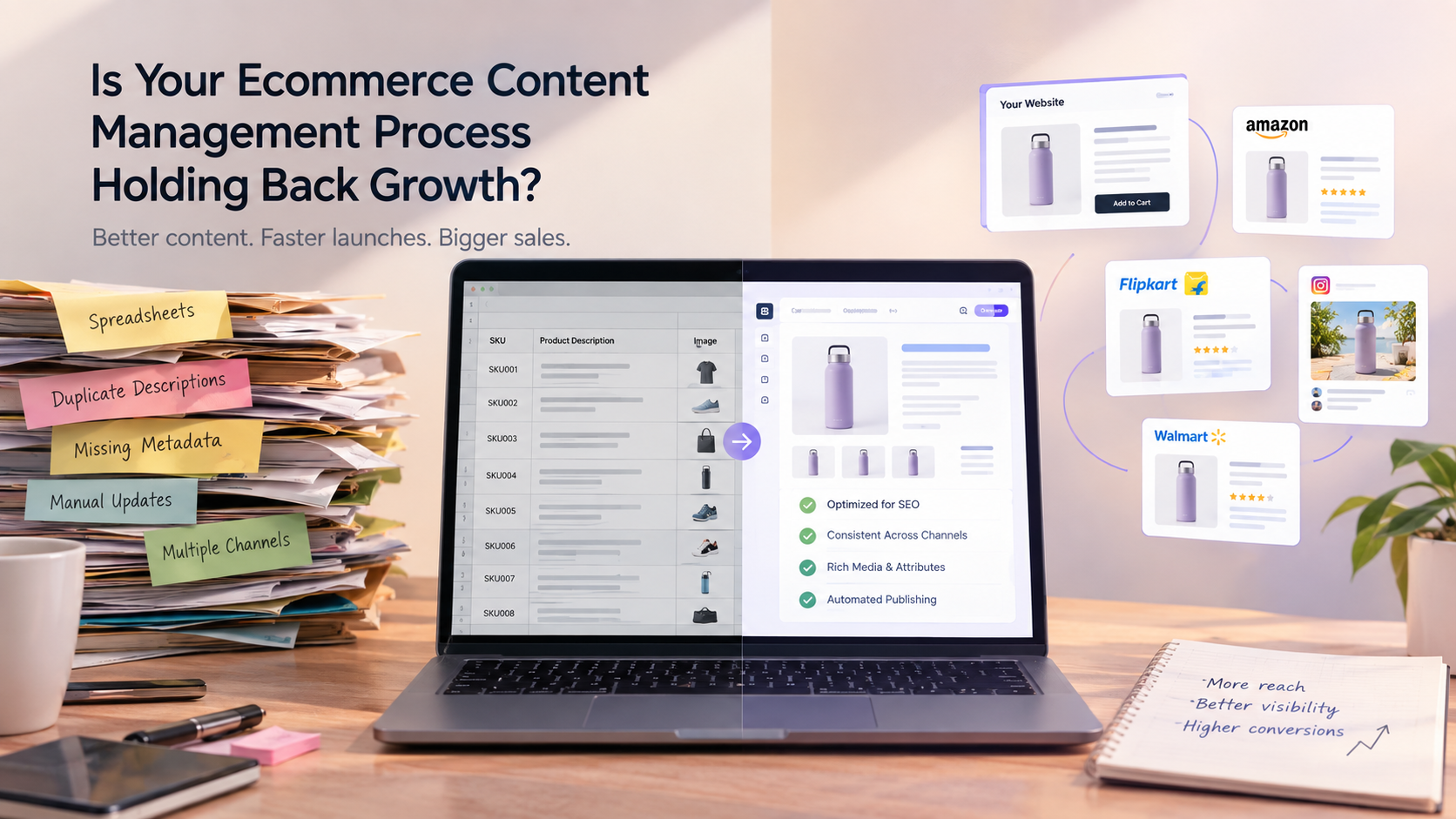
Manual catalog management worked when businesses sold dozens of products. Today's ecommerce brands often manage tens of thousands of SKUs across multiple channels, making traditional workflows increasingly inefficient. Common challenges include:
Teams spend hours copying product descriptions, updating specifications, resizing images, and formatting marketplace listings. Instead of creating value, they spend time maintaining data.
One incorrect specification on Amazon, another on Shopify, and different pricing on your website quickly damage customer trust. Consistency becomes harder as catalogs grow.
Every delay in content creation delays revenue. Large product launches often stall because teams cannot create optimized content quickly enough.
Rather than replacing content teams, AI removes repetitive work so specialists can focus on strategy, quality, and customer experience. Here's how.
AI can generate:
Instead of starting from a blank page, teams begin with optimized drafts that require only human review.
One of the biggest advantages of product catalog automation is speed. Rather than manually updating thousands of SKUs, AI can automatically:
This dramatically reduces publishing time while improving accuracy.
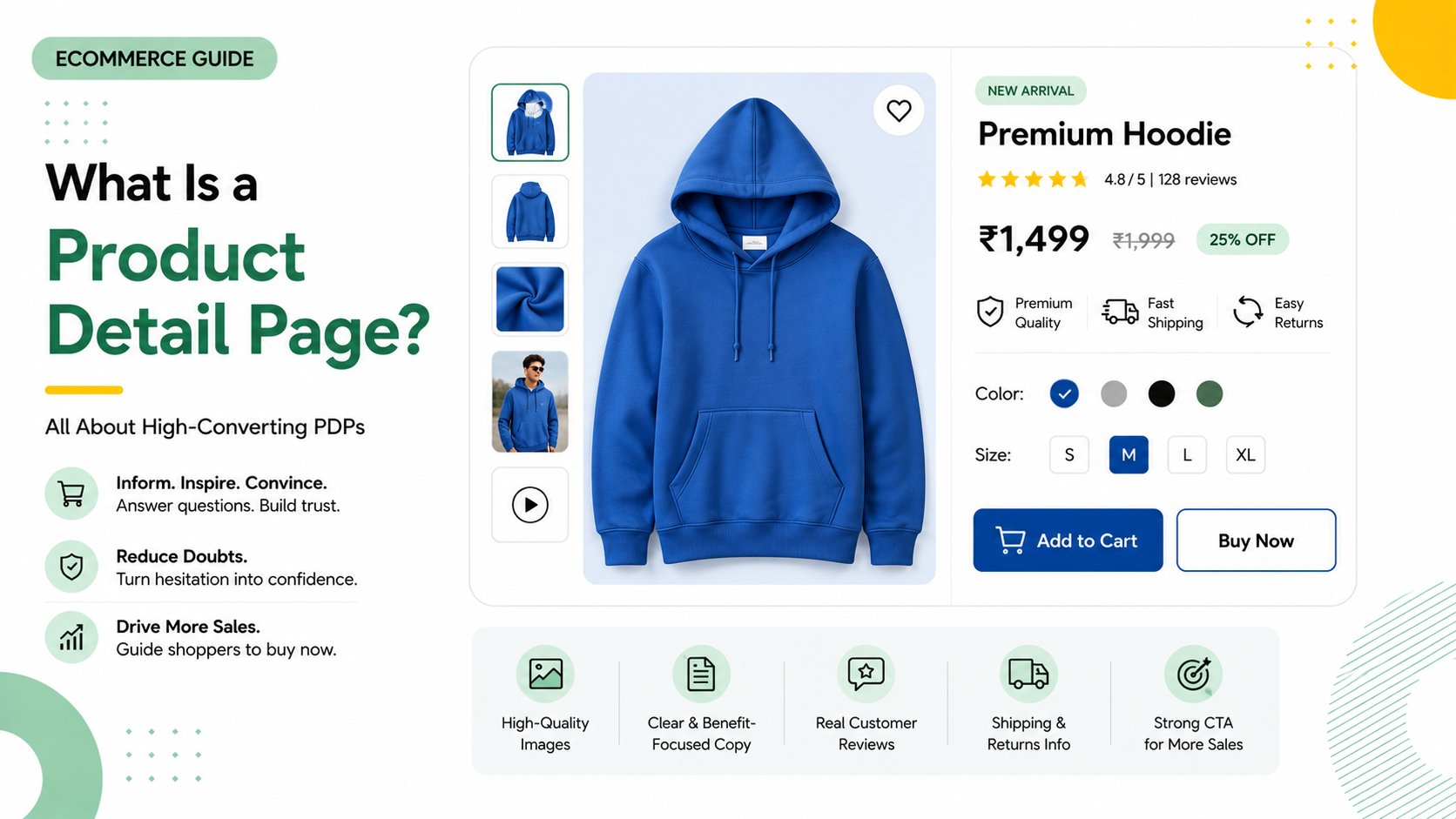
Incomplete product pages can create gaps in the buying journey. A high converting product detail page is built when it includes the right combination of:
AI helps ecommerce teams identify what is missing from product pages and recommends improvements to strengthen the overall product experience.
Customers expect the same information whether they shop on your website or through Amazon. AI ensures that descriptions, attributes, and digital assets remain synchronized across all platforms. This is particularly valuable for businesses managing international catalogs.
As catalogs expand, manual management becomes increasingly expensive. AI enables brands to:
Instead of scaling teams, businesses scale workflows.
Many brands mistakenly treat content creation and catalog management as separate processes. They're actually deeply connected. Strong content and catalog management in ecommerce combines:
Together, these elements create better shopping experiences while improving discoverability.
AI handles repetitive catalog tasks, while humans focus on creativity, strategy, and quality. For example, Amazon uses generative AI to help sellers create product titles, bullet points, and descriptions from basic product information. Sellers can then refine the content to match their brand voice and customer expectations.
Similarly, an ecommerce brand launching hundreds of SKUs can use AI for initial drafts and formatting, while its content team focuses on stronger storytelling, persuasive messaging, and creative positioning. This combination delivers both speed and human creativity.
Industry analysts expect AI to become increasingly embedded within ecommerce operations. Future capabilities include:
Brands investing today will be better positioned to manage tomorrow's increasingly complex product ecosystems.
As ecommerce catalogs become larger and more complex, manual workflows simply cannot keep pace. AI enables businesses to automate repetitive tasks, improve product accuracy, accelerate launches, and deliver richer customer experiences across every sales channel.
As ecommerce catalogs continue to grow, businesses that invest in AI-powered ecommerce solutions will be better equipped to automate operations, improve product data quality, and deliver consistent shopping experiences across every sales channel.
Rather than replacing ecommerce teams, AI catalog management empowers them to work smarter, focusing on strategic growth instead of repetitive catalog maintenance. For brands looking to scale efficiently, combining AI with professional Ecommerce Catalog Management solutions creates a future-ready foundation for sustainable growth.
Tell us what you're working on and we'll get back to you with ideas and next steps.


Ecommerce catalog management involves organizing, updating, enriching, and distributing product information across ecommerce websites and marketplaces to ensure accurate, consistent customer experiences.
AI automates product descriptions, categorization, metadata generation, quality checks, and content enrichment, helping businesses manage large catalogs faster and more accurately.
Product catalog automation uses AI and automation technologies to reduce manual work involved in updating, organizing, and publishing product information across multiple channels.
Combining content and catalog management improves SEO, customer trust, marketplace consistency, and operational efficiency while supporting better buying experiences.
Yes. Modern AI solutions can assist with translations, localization, metadata generation, and product content optimization for multiple regional marketplaces.
Expect hyper-personalization (descriptions tailored to individual buyers), voice-search optimization (content matching how people speak rather than type), and stronger multilingual support for faster global catalog rollout.

.png)


