


The digital shelf is packed. Amazon alone hosts over 600 million products. Shoppers on Amazon, Flipkart, Myntra, or Shopify make buying decisions in seconds based on images, titles, and reviews. They judge visual clarity long before reading the fine print.
Mobile commerce now completely dominates. Smartphones drive nearly 80% of global e-commerce traffic and 66% of all orders.
With most conversions coming from small screens, discounts aren't enough. You need an intentional e-commerce content strategy. High-quality content directly boosts discoverability, Click-Through Rates (CTR), and Conversion Rates (CR), building the trust required for long-term growth.
When making purchases, online consumers are faced with a unique problem: they do not have the luxury of touching, handling, feeling, or trying out a product in order to purchase it.
It is a sensory limitation. The content about your products is essentially your virtual salesperson. If there are any holes in your product information, fuzzy pictures, or a disorganized presentation, people will simply move away from your website and choose another brand.
Furthermore, you are not just selling to humans, but to algorithms too. Marketplace search engines do not operate in the same manner as Google. They are specifically designed for efficiency in transactions. As such, the algorithm places much importance on a listing's ability to demonstrate engagement and direct search intent.
Look at Amazon Basics. They focus entirely on utility and clarity, using clean imagery, standard specs, and side-by-side comparison tables to turn simple descriptions into high-conversion tools.
Conversely, Nykaa focuses on lifestyle-driven storytelling. They don't just list chemical components; they explain distinct benefits through step-by-step video tutorials and texture swatches to address specific consumer concerns before they cause a bounce.
To achieve sustained visibility, your strategy for e-commerce must align your content strategy with how human beings actually query search engines and AI platforms. Modern search behavior usually falls into three primary buckets:
When users have Informational Intent, they are searching for education before settling on a product class (e.g., "best shampoo for dry hair"). You should serve them comprehensive buying guides.
When they have Commercial Intent, they are weighing specific brand options against each other (e.g., "mineral vs chemical sunscreen"). You should provide detailed comparison matrices and feature callouts.
Finally, when they have Transactional Intent, they are looking for a direct path to purchase immediately (e.g., "buy protein shaker bottle online"). Here, you must provide highly optimized product titles and immediate add-to-cart conversion blocks.
Your text assets serve two very different masters: they must contain keywords for marketplace search algorithms while remaining clear, persuasive, and easy for shoppers to understand.
Finding this balance is where many brands struggle. This is why strategic content solutions play a significant role in improving both discoverability and conversions across e-commerce platforms.
To improve conversions, you need to learn the difference between right and wrong messaging. Let’s understand this with an example.
❌ Wrong: “Premium Running Shoes for Men, Sports Shoes, Gym Shoes, Comfortable Shoes”
This title is repetitive, emotionally flat, and written only for keywords. It tells shoppers what the product is, but not why it matters to them.
✅ Better: “Lightweight Running Shoes for Men with Cushioned Sole for Everyday Comfort”
This version still includes searchable keywords, but it also introduces a benefit-driven emotional trigger: comfort. Instead of sounding robotic, it helps shoppers immediately imagine the experience of using the product. The same principle applies to descriptions. The strongest ecommerce listings do not just inform shoppers about features; they connect those features to real-life outcomes. A water-resistant backpack is not only “made with durable polyester.” It “keeps your essentials protected during daily commutes and unexpected weather.”
As marketplaces grow, standard product descriptions are no longer enough to build real consumer relationships.
When improving Amazon product listings, utilizing features like Amazon A+ Content or Flipkart Brand Stores gives you the space to communicate your brand identity. You can explain complex manufacturing and showcase your ecosystem through such platforms.
For example, Mamaearth uses enhanced modules to share core values like ingredient transparency and its tree-planting commitment. By connecting their corporate mission directly to the product display page, they build an emotional connection that helps justify premium pricing.
Human brains process visual data much faster than written text. On an e-commerce platform, your images and videos do the heavy lifting during a purchase decision.
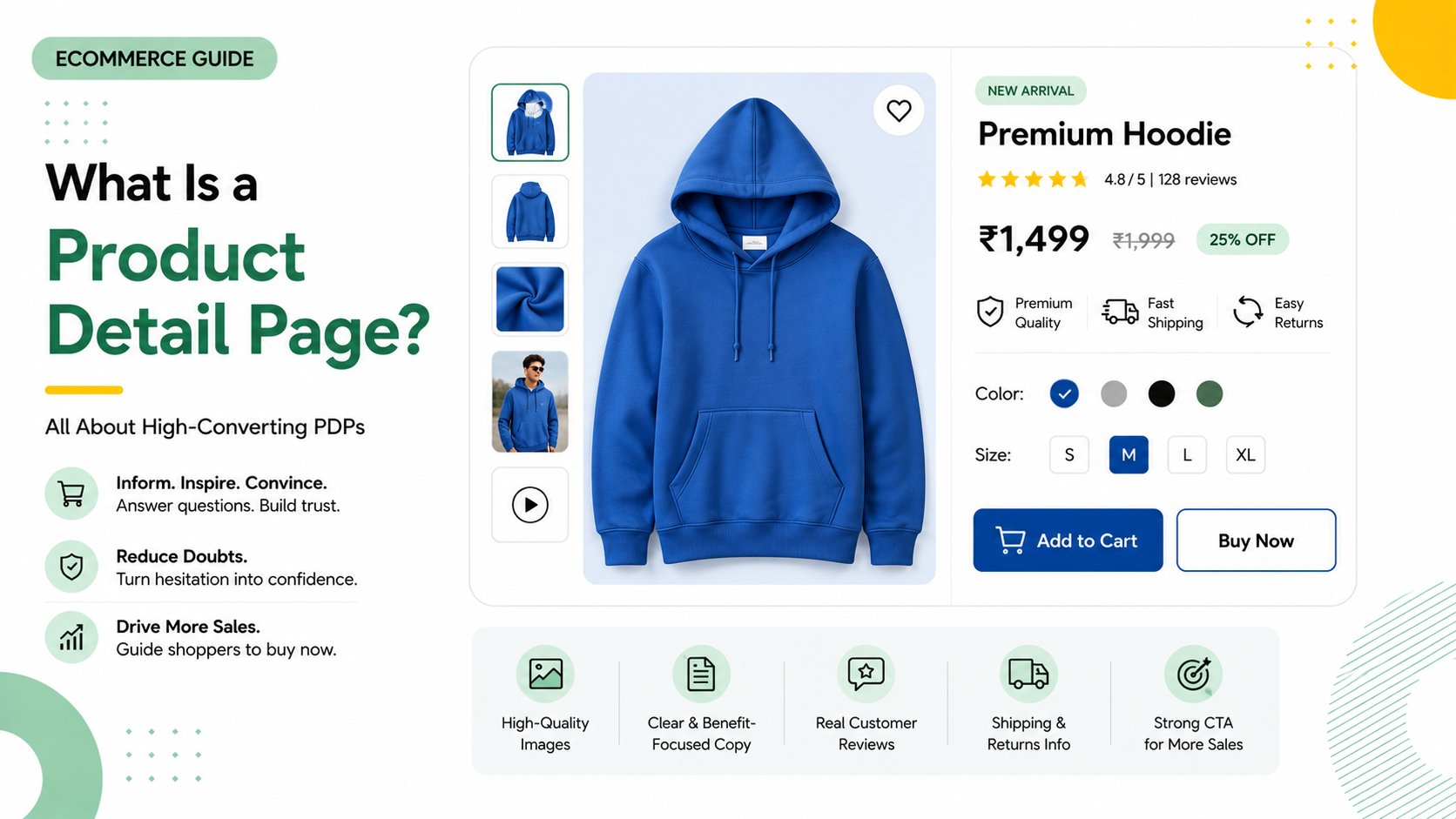
When planning your ecommerce product photography, a high-converting product page requires a balanced mix:
Modern consumers look for peer validation before making a purchase. Any authentic content strategy e-commerce brands deploy must look beyond brand-created assets.
Integrating User-Generated Content (UGC), real unboxing videos, and unedited customer review photos directly onto your pages acts as an authentic trust signal. They show prospective buyers that your product performs well in everyday conditions.
According to PowerReviews, products with genuine reviews can see conversion rate lifts of up to 270% compared to products with zero reviews.
Sephora takes this a step further by allowing shoppers to filter reviews by specific traits like skin type or age range. This turns a standard review list into a highly relevant conversion tool.
Building out a clear FAQ section is an incredibly effective way to optimize your store for Answer Engine Optimization (AEO) and AI-driven searches. Platforms like Google AI Overviews and Perplexity rely on highly structured data to pull accurate answers for conversational queries.
When you answer practical questions directly on your listing page, such as "What are the exact product dimensions?" or "Is this formulation sulfate-free?" you satisfy conversational AI search engines while resolving final customer doubts right before checkout.
You can't just upload an asset catalog once and walk away. An effective strategy requires constant attention and regular optimization. Top-performing digital brands routinely run structured experiments on their store content, much like Netflix tests different artwork variations for different users.
Monitor your listing CTR: if impressions are high but clicks are low, test new main product photos. Watch your Add-to-Cart rates: if users visit but skip checkout, improve your benefit callouts or add infographics.
Finally, track return metrics: if return rates are high due to mismatched expectations, update your lifestyle imagery or add a scale comparison chart.
Sustained ecommerce growth requires an investment in clear, high-quality product content. Your digital shelf assets directly impact your organic search visibility, customer acquisition costs, and brand loyalty. To build a resilient business, a strong e-commerce content strategy must design experiences that satisfy automated platform search requirements. It should also build trust with real human shoppers. Brands that combine strategic keyword placement, modular visual assets, and continuous optimization will secure a dominant position in tomorrow's digital marketplace.
Tell us what you're working on and we'll get back to you with ideas and next steps.


A winning ecommerce content strategy optimizes every digital touchpoint for conversions. It balances SEO-friendly copy, high-quality lifestyle imagery, user-generated content, and clear FAQs to satisfy search algorithms and human shoppers.
Review your content strategy for ecommerce website platforms quarterly. You must also update listings immediately when search trends shift, marketplace rules change, or conversion data indicates a performance drop.
The biggest mistakes you can make include keyword stuffing, using generic manufacturer descriptions, and uploading low-resolution images. Ignoring mobile optimization and leaving common customer questions unanswered will also quickly damage your conversions and customer trust.
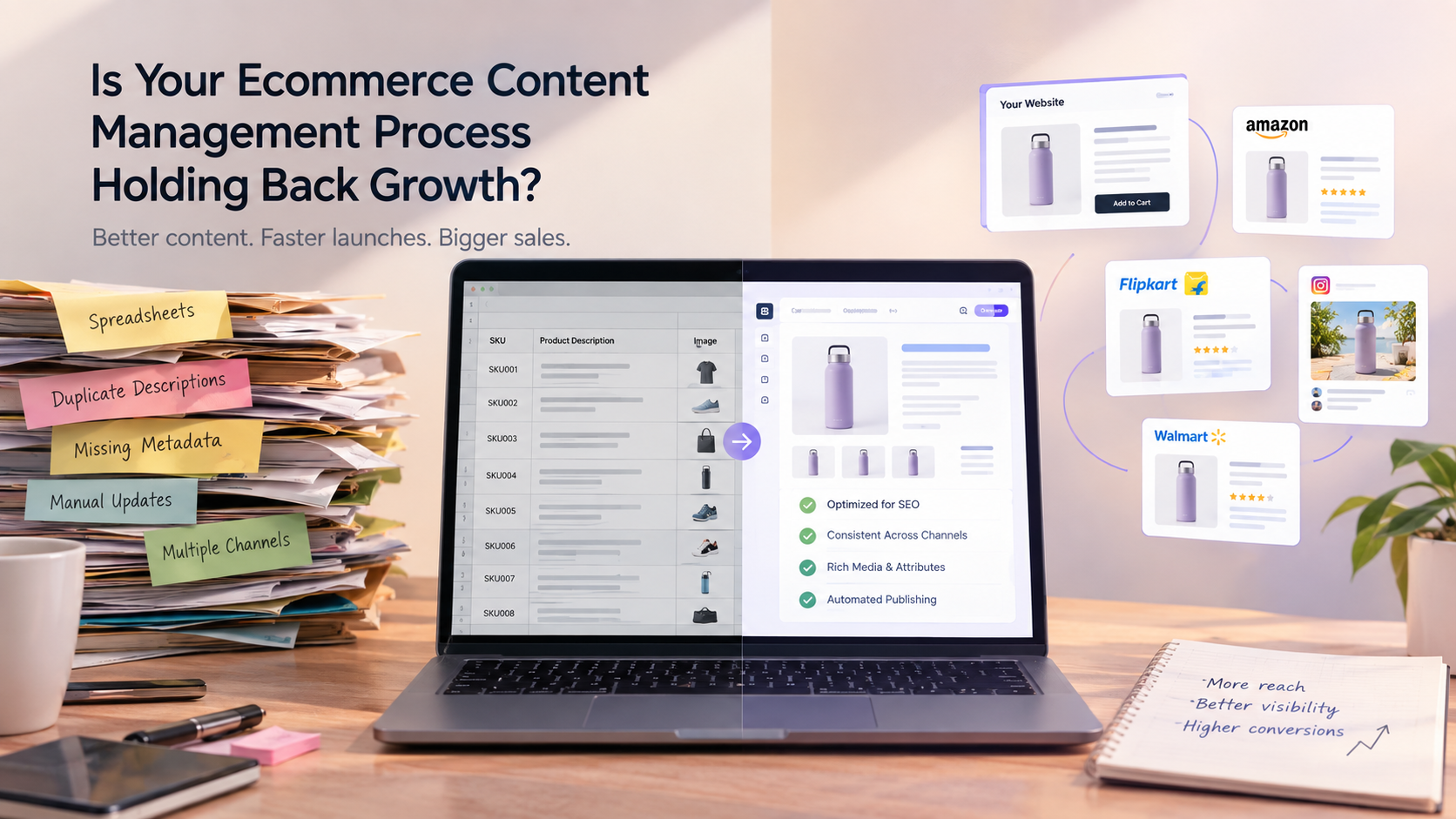
To execute a high-volume content strategy ecommerce brands rely on ODN’s ecosystem. We manage bulk SKU handling, rapid turnarounds, and catalogue enrichment, ensuring products launch quickly with marketplace-ready creatives.
ODN transforms product catalogs into revenue engines. We blend creative design with data-driven performance by delivering SEO-friendly copy, multi-platform visual compliance, and multilingual localization for maximum omnichannel discoverability.
Start with high-traffic and high-revenue products first. Optimize titles, product images, descriptions, and FAQs before expanding improvements across the catalogue. Prioritizing content updates based on performance data usually delivers faster conversion gains than updating every SKU at once.

.png)


