

.png)
A shopper opens a product page at 11 pm, half-convinced already. She scrolls, looking for the detail that will make her trust this purchase enough to finish it. There is no salesperson beside her, only the page. In that moment, content does the job a salesperson would: demonstrate, answer, build trust fast.
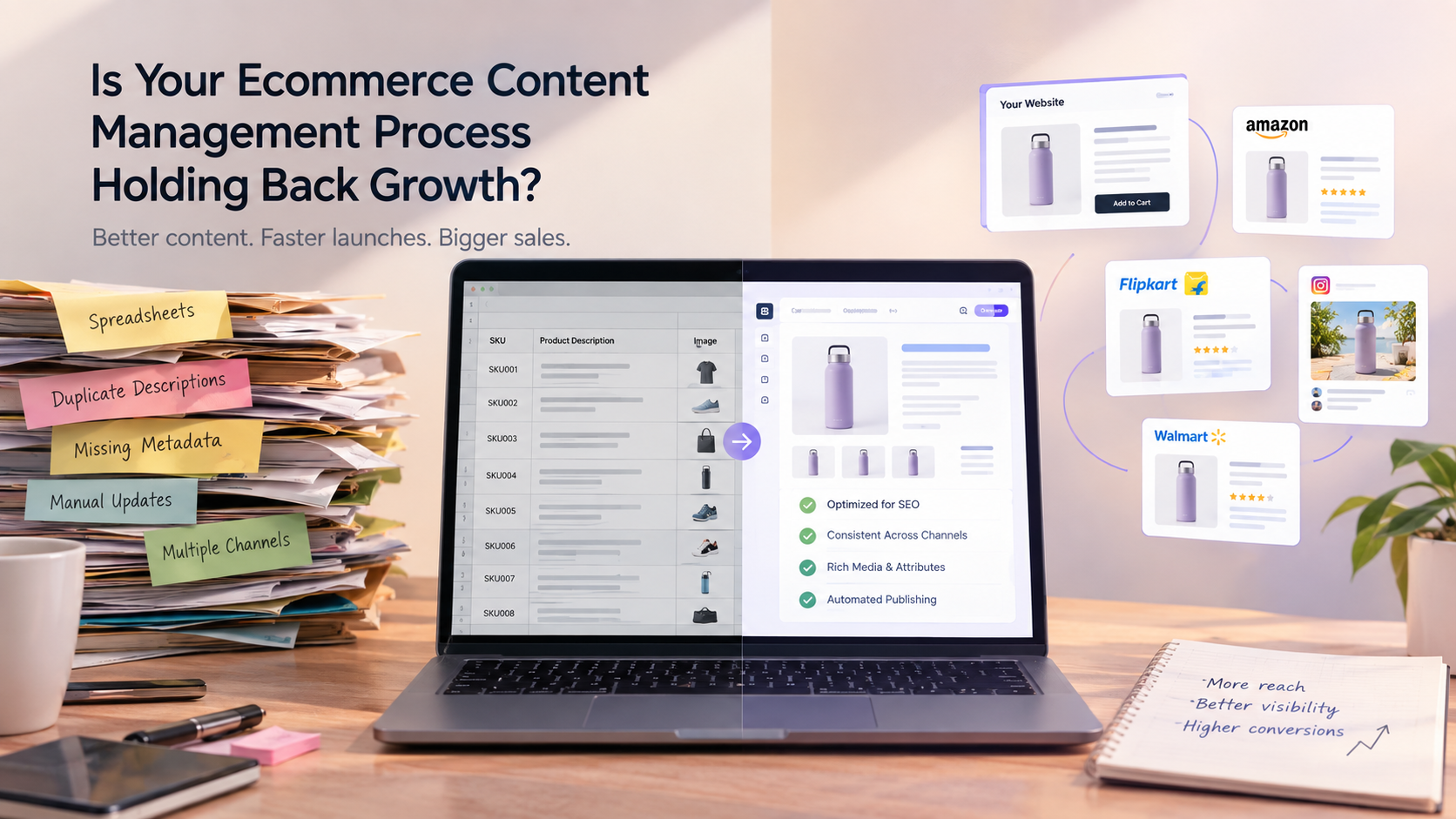
Whether that page lives on your site or a marketplace like Amazon, Flipkart, or Walmart, those words close the sale or lose it. Here is what most brands get wrong. They write one page and reuse it everywhere, treating content writing for ecommerce websites and marketplace listings as the same task.
A description that reads beautifully on a D2C site can get flagged or ignored on Amazon, where structure and character limits rule everything. This guide breaks down how to write ecommerce content that ranks, engages, and converts, with real ecommerce content writing examples for D2C brands and marketplace sellers alike.
Most ecommerce content types fall into two broad buckets, and each one plays by different rules. Brand websites reward storytelling and depth, while marketplaces reward structure and precision. Confusing the two rarely works well. Knowing which bucket a piece of content belongs to is the real first step toward writing it correctly.
Brand Site Content:
Marketplace Content:
Whether it's on your website or on Amazon, strong ecommerce product content follows the same core principles, even if the format changes:
On your website, you have room to build a scene that describes a use case or lifestyle moment. On marketplaces, structure wins: title, bullets, description, and specs, in that order, with no room for fluff.
Category pages are one of the most overlooked SEO opportunities in ecommerce. Too many brands treat them as a simple product grid under a heading like "Men's Running Shoes" or "Kitchen Essentials," and leave real ranking potential on the table.
A strong category page includes:
Example: "Explore our range of kitchen cookware sets, crafted for efficiency and durability. Whether you're a home cook or a professional chef, our non-stick, cast iron, and induction-friendly options ensure flawless cooking results every time."
Done well, this kind of content improves search ranking, helps buyers make faster decisions, and keeps people on the site longer instead of bouncing to compare elsewhere.
Marketplace content demands a different skill entirely: precision within a fixed structure.
Once a listing goes live, A+ modules are where brands can add real depth back into a rigid marketplace format:
Pro tip: A+ Content can go live within 48 hours through layout automation, creative adaptation, and built-in compliance checks on Amazon and Flipkart, using ODN's Quickup.
Seeing the same product written two ways makes the difference concrete.
Website version: "Start your mornings right with our ceramic pour-over coffee maker designed for slow mornings, quiet kitchens, and coffee that actually tastes as it should."
Marketplace version: "Ceramic Pour-Over Coffee Maker, 500ml, Heat-Resistant, Includes Reusable Filter Brews Rich, Full-Flavor Coffee in Under 5 Minutes."
Same product, same core benefit, completely different structure. The website version sells a feeling. The marketplace version sells a spec sheet with a benefit attached. Both are correct for their platform.
Your ecommerce website and marketplace listings may showcase the same products, but they serve different audiences and follow different rules. Here's how content creation practices differ across both.
Want to scale quality content across 500+ products without losing consistency? ODN’s ecommerce content solution handles automated cataloging, rich content production, and fast, multi-platform publishing
Automating product listings is no longer optional for ecommerce brands scaling across multiple channels. It's the difference between chasing errors manually and running a synced, real-time operation.
Some tools handle the basics, while solutions like QuickUp by ODN push further into rich, SEO-optimized PDP content. As AI-driven personalization and voice search continue to grow, the brands automating content production now will be the ones best positioned to scale next.
Tell us what you're working on and we'll get back to you with ideas and next steps.


Content needs differ by platform. On your website, lean into brand voice, storytelling, and SEO-friendly descriptions. On marketplaces, stick to structured formats: title, bullets, description. Highlight USPs clearly, and follow each platform's specific rules
For websites, 200–300 words is a solid target. For marketplaces, aim for around a 2,000-character description alongside 5 bullet points of 200–250 characters each.
No. Duplicate content across platforms hurts SEO and reduces conversion potential on both. Tailor content to each platform's audience, format, and algorithm instead of copy-pasting the same version everywhere.
A+ Content (Amazon) or Enhanced Brand Content enables brands to add images, comparison charts, and custom modules to product listings, thereby enhancing the brand’s conversion rate.
Creating content manually is impossible to scale. Platforms like ODN's Quickup allow for automation of product data creation into optimized content that is ready for the platform. This saves time and increases efficiency.
Untested automations can push incorrect data live across every channel at once — like wrong pricing, mismatched attributes, or broken image links — turning a small error into a multichannel problem instantly.

.png)


